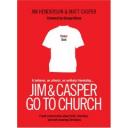
 I just finished Jim & Casper Go To Church, by Jim Henderson and Matt Casper, and I would add it to my <em>must read</em> list for churches. It is a keen observation at how churches look to outsiders—in this case an atheist named Matt Casper. A quote from the Foreword lays out the direction of the book. Continue reading Jim and Casper
Category Archives: theology
Ignorance is not a good thing!
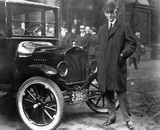 “The only thing worse than training your people and having them leave is not training them and having them stay.” Henry Ford.
Organizations that do not train their people are poured in ideological and methodological concrete. In some respects they are like a university that never allows research or thought that is dated after a particular time. This effectively freezes all learning, and the university (or organization) gets no benefits from new discovery.
Joy
In his book, Letters to Malcolm, pages 92–93, C.S.Lewis wrote the following:
Dance and game are frivolous, unimportant down here; for ‘down here’ is not their natural place. Here, they are a moment’s rest from the life we were placed here to live.
I have been working on a summer sermon series about the Fruit of the Spirit, and this week I have been writing a sermon about joy. That has prompted me to think about and observe whether the people around me appear joyful or not. It has been my observation that, in too many cases, joy is woefully lacking.
Don’t rock the boat!
I had a friend once tell me that he thought you just needed to accept the way things are. To acquiesce. Knuckle under. Give in. Give up.
Those weren’t the exact words he used, but that was the bottom line of what he was saying. After the conversation was over I felt profound sadness for him.
Dialogue with Atheists
A letter to the editor in our local newspaper was from an atheist who was taking exception to what a vocal Christian had written in the same paper. It was clear from the editorial that all the argumentation and debate had produced no concensus and no faith.
The argumentation and negative results make you wonder if there isn’t a better way to talk about one’s faith. Is debate really that effective? Can you change someone’s mind through debate and elaborate argumentation?
“Meant to be”
I’m puzzled by the frequency with which I hear the phrase, “It was meant to be.” It implies that some force or god was controlling events and that the meant-to-be experience was orchestrated.
It’s interesting that the phrase is used equally by christians and non-christians. So for christians, the phrase points to God for the meaning. And the non-christians give credit to Fate or some other impersonal force for the occurence. Continue reading “Meant to be”
Timothy Johnson, M.D.
 Bev was reading to me this morning from Timothy Johnson’s book, Finding God in the Questions. We both thought that it was pretty courageous to write this in light of his public celebrity. I was especially impressed with his comments about freewill. Continue reading Timothy Johnson, M.D.
Jim and Casper
My book came in the mail today. A few months ago I got to read five chapters of it while it was still being written, and it drew me in.
Jim and Casper Go To Church is the joint work of a devout Christian (Jim) and an atheist (Casper). Over one summer they visited several churches around the U.S. The book contains observations about 11 of those visits. Continue reading Jim and Casper
Will of God
This week I read two different blogs, both dealing with the will of God, although from slightly different vantages. The first came from Christian Century. In that blog, James Howell cautions against too quickly assuming that you know what God wills.
In a second blog, my friend Peter Walker reflected on how many times in his life he thought the Holy Spirit was guiding him to do something, only to discover that it was his own “gut” providing the guidance. Peter is wise in his caution.
 MonoLogue