 I really enjoy conducting weddings. My most recent occurred at a local museum. The individual that was first asked to conduct the wedding couldn’t, so I was asked if I could take his place. It was an honor to be asked. Weddings are deeply personal occasions, and to be asked to enter that space is really humbling. Continue reading Weddings
Category Archives: Missional
Part of the Problem
Brian McLaren included a link to a Bread for the World video that is poignant and convicting. I’ve attached it below because I think it identifies a too common belief that organizations, not individuals, are responsible for bringing change to the world. The same abdication of responsibility can be seen at election time when a pitifully small portion of the electorate turns out to cast a ballot.
So take a look at Bread for the World’s take on this. It will make you squirm.
Table Talk
 At LifeSpring Church we believe that everybody should be able to participate as fully as they would like. So we give people ample opportunity to volunteer to lead congregational prayers, read scripture, and provide the Lord’s Supper meditation, which we call the “table talk.”
When we started doing this over a year ago, you could see some awkwardness. We didn’t know each other that well at that point. Folks didn’t know what was expected of them. Most of us had grown up believing that such involvements should be reserved for an elite group of leaders.
But now our church community has grown comfortable with our egalitarian approach to worship and participation. Everyone feels included and appreciated. We are often blown away by the profundity of what is shared in communion mediations, or we’re moved by the skillful reading of a text. It’s a really neat process in which to participate.
Yesterday Sean told us about the changes he has experienced in the last two years of his life. He said that the Lord’s Supper is like a “pit stop” on the Amazing Race television show. It has served to slow him down and make him think about what is happening in his life and the Lord’s relationship to that. I was thankful for Sean’s transparency as well as for the eloquence of what he shared with us. He made the Lord’s sacrifice real for us.
I am glad that LifeSpring recognizes the strength of everyone sharing. By getting to hear what was on Sean’s heart, my life was improved. Now I can’t wait to hear what the next LifeSpringer shares.
Christmas Parade
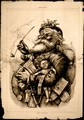 Today, December 1, was the day of Merced’s annual Christmas parade. The parade route went down Main Street right past Playhouse Merced. LifeSpring was invited to put up a table inside the Playhouse entry way, right next to the sidewalk. We all thought that was a good idea, although we didn’t know what to expect.
In a planning meeting it was suggested that we serve coffee or hot chocolate to parade goers. LifeSpringers also brought homemade cookies to serve, but it was soon discovered that we didn’t have nearly enough. The parade crowd was huge. An emergency run was made to purchase more, and by parade end, all of the cookies were gone.
Our team agreed that the event was a huge success. We gave away 200 drinks. We gave away even more cookies. Several LifeSpring invitation cards were taken, and we provided a very positive image of our church community. Probably the best outcome was the enormous fun that we all had working together to do something good.
After the parade was concluded LifeSpring conversations began about how we would improve on what we just did. A number of excellent suggestions were made, and we’ll be even better prepared next time.
“Church” Jargon
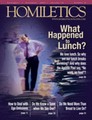 Bob Kaylor, senior writer for Homiletics Magazine, has gotten me to thinking about my vocabulary, particularly in regard to people who are not currently part of a church community. I’ve struggled with what name to use to refer to this rather large group. Sadly, I’ve resorted to the all-too-common term, “unchurched.”
Kaylor writes that being “churched” is not necessarily a good thing and “being in church doesn’t make you a Christian anymore than being in a garage makes you a car.” I like that. It reminds me that I need to be more concerned about a person’s proximity to Jesus.
Plus, you wouldn’t necessarily want a new believer to look like some of the “churched” folks. Kaylor has an 11–person playlist of people that you might want to avoid looking like in church. They include the following six:
- De-churched people populate the church rolls but don’t attend anymore.
- Roto-churched people drift from church to church based on whose youth/children/music program is “hot.”
- Mega-churched people can only engage in worship with a praise band, video screens, and Starbucks in the foyer.
- Casual-churched people drop by when they have nothing better to do.
- Mal-churched people never miss church services, sit in the same pew, and never, ever smile.
- H2O-churched people – that’s “Holidays, 2 Only.”
LifeSpring wants to attract people who have no current relationship with Jesus and/or with disciples of Jesus. That can be very different from people who simply “go to church.” There’s far too many of that kind of person.
Marketing
 Marketing is a huge puzzle to me. Classic church planting models often employ heavy use of direct mail and other forms of mass advertising. But LifeSpring didn’t have anywhere close to the amount of money that approach would take. Later we got a one time infusion of $4000 cash that was earmarked specifically for marketing. We gave direct mail a try, but it was very costly and a poor method.
Since that time we’ve tried other things: pens with our logo and URL on them, cotton tote bags with our logo and URL, printed invitation materials, small posters, etc. We’ve given goody bags to teachers at their beginning of the year reception, provided advertising materials to a real estate mortgage person to use in a promotion she had going, and provided items for a golf tournament that the Chamber of Commerce was sponsoring.
The results have been the same in every case; the items are good for branding, but they don’t build relationships. We have found that nothing substitutes for being personally present in the lives of people.
Today I went to a presentation by a local radio station. The station was offering a nice advertising package to small businesses. It is a very tempting offer because it would double the number of spots that we currently have on the radio, and it would spread them across 4 radio stations rather than just 1 as we presently do.
I hate decisions like this. We’ll be spending about $250 more a month than we currently do. However we currently believe that a sustained and long term advertising presence is necessary in order to make people aware you exist. Since we can’t see the future, it is always a “gamble,” or uncertainty. But we believe God is at work. So we’ll buy the advertising and leave the outcome to God.
If you want to help us financially with this marketing, go to our Donation Site and send us some help. It is well needed and enormously helpful to this work.
Never Eat Alone
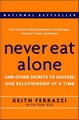 I just finished Keith Ferrazzi’s excellent book, Never Eat Alone. I found out about the book from several references to it on LinkedIn’s excellent business networking site. Still, you never know what you’re going to find when you buy a book based on others’ recommendations.
Almost from the first page of the book I was hooked. I knew that Ferrazzi had a different take on things than most business success types. He knows that no one is “self-made” in the strictest sense of the word. We’re all in this together, and people who are generous to others are the most successful in their pursuits. Here are a few quotes from Ferrazzi.
- Poverty, I realized, wasn’t only a lack of financial resources; it was isolation from the kind of people that could help you make more of yourself, page 5.
- I learned that ‘real’ networking was about finding ways to make ‘other people more successful, page 9.
- “So you want the inside scoop,” I respond. “Fair enough. I’ll sum up the key to success in one word: generosity,” page 14.
- Autonomy is a life vest made out of sand, page 17.
- In other words, the currency of real networking is not greed but generosity, page 21.
- I would argue that your relationships with others are your finest, most credible expression of who you are and what you have to offer, page 22.
I think the book has indispensable information for anyone that is wanting to connect with the world around. I find it to be especially relevant in a church planting context and would immediately recommend it as a “must read” book. Ferrazzi also has a blog which is fun to read. Enjoy.
Shakespeare in the Park
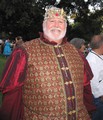 Three weeks ago Bev and I went to see The Tempest at one of our local parks. Shakespeare in the Park is a local production, and it stars talent from the surrounding areas. Two of Shakespeare’s works are presented each summer, and admission is free.
Attendees bring their lawn chairs and drinks and sit out under the trees as they watch live theatre. Sets are very portable and creative. Costumes are donated for the productions. Shakespeare is a project from people who love the arts, particularly Shakespearean theatre.
I like Shakespeare in the Park because it feels like quintessential community. Bev said to me, “Move down a little; this couple wants to sit next to us.” An old couple were trying to find a spot to land, and we were happy they chose that spot. After the performance they had opened up their food and were eating their dinner of sandwiches.
After the performance was over, groups of people milled around from group to group. Saying “Hello” as if they had not seen each other for years. Heike, the director of Shakespeare in the Park, presides over the milling crowd like a proud mother. She has a right to feel pride; it is a good event.
The Tempest was the second and last play for the 2007 season. Now we have to wait until 2008 to again sit in Applegate Park to watch our friends bring Shakespeare to life.
Heifer Project
 Our Tennessee grandchildren are visiting us this week. Every Christmas Bev makes a contribution in their name to the Heifer Project, and she wanted them to be able to see first-hand what Heifer does.
HP is a non-profit organization that donates animals to people around the world who need a way to provide food and income for their families. A heifer, for example, would provide milk and cheese for a family. The heifer’s first calf would also be donated by that family to another family so that the blessings are passed on.
“Let me buy you a coffee.”
 Yesterday I was in line at Starbucks for my morning cup of coffee. There were about four or five people in front of me, including the man with the stand-up collar. He looked like a business man, and the collar was an accident.
I debated with myself whether to say anything. Every once in a while I bump into someone who doesn’t want to be bothered so I wondered if he would be irritated if I mentioned his collar. I decided to take the risk.
 MonoLogue